Heatstroke: Causes, Symptoms, Treatment, Prevention, and First Aid
Introduction
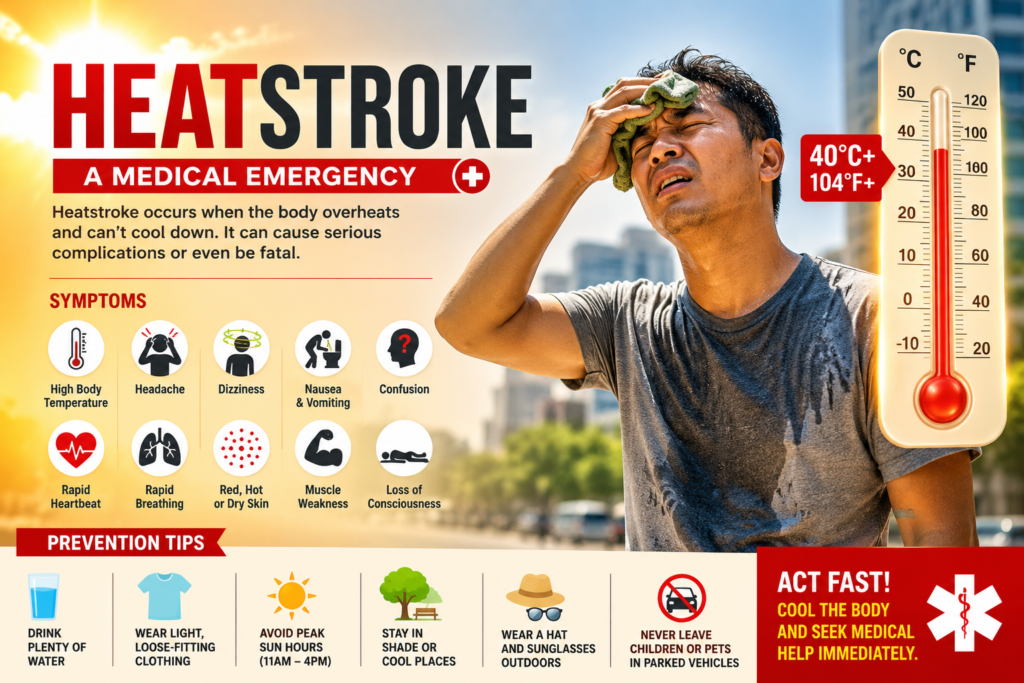
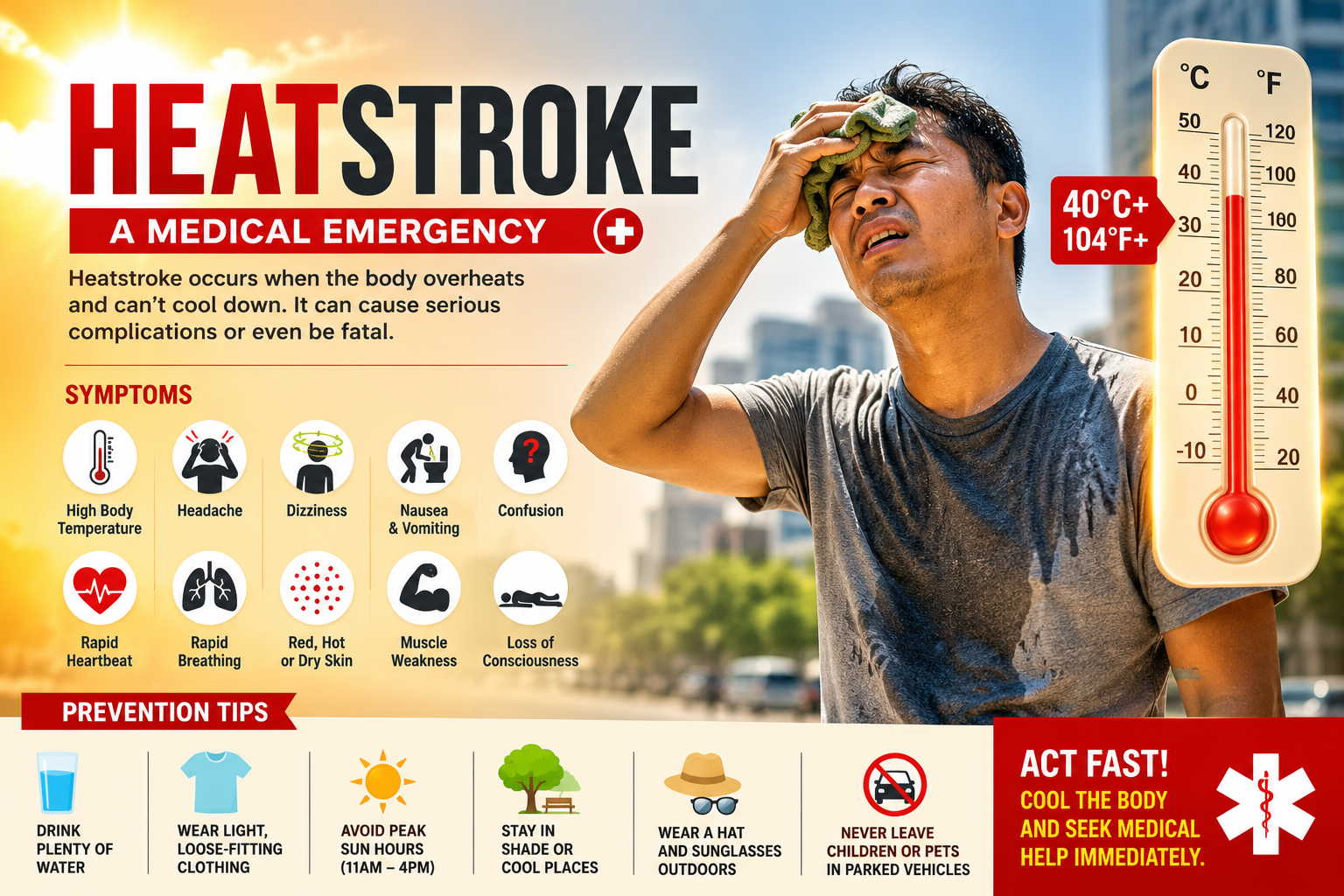
Heatstroke is one of the most serious heat-related illnesses and is considered a medical emergency. It occurs when the body’s temperature rises to 40°C (104°F) or higher and the body’s cooling system fails to regulate the temperature. Without immediate treatment, heatstroke can damage the brain, heart, kidneys, and muscles. In severe cases, it can even be fatal.
Heatstroke is more common during hot summer months, especially in regions experiencing heatwaves. People who work outdoors, athletes, children, older adults, and individuals with certain medical conditions are at higher risk.
What Is Heatstroke?
Heatstroke is a condition in which the body’s internal temperature rises dangerously due to prolonged exposure to high temperatures or strenuous physical activity in hot weather. Normally, the body cools itself by sweating, but during heatstroke this mechanism becomes ineffective.
Heatstroke requires immediate medical attention because every minute without treatment increases the risk of permanent organ damage.
Causes of Heatstroke
Several factors can lead to heatstroke, including:
- Prolonged exposure to extreme heat
- High humidity that reduces sweat evaporation
- Heavy physical activity in hot weather
- Dehydration
- Wearing thick or tight clothing
- Staying inside poorly ventilated rooms
- Certain medications that affect hydration or temperature regulation
- Alcohol consumption during hot weather
Risk Factors
People at higher risk include:
- Infants and young children
- Older adults (65 years and above)
- Outdoor workers
- Athletes
- Pregnant women
- People with heart disease, diabetes, or obesity
- Individuals taking medications such as diuretics or antihistamines
Symptoms of Heatstroke
Common symptoms include:
- Body temperature above 40°C (104°F)
- Hot, dry skin or heavy sweating
- Severe headache
- Dizziness
- Confusion
- Slurred speech
- Rapid heartbeat
- Rapid breathing
- Nausea and vomiting
- Muscle weakness
- Seizures
- Loss of consciousness
If these symptoms appear, seek emergency medical help immediately.
First Aid for Heatstroke
While waiting for medical assistance:
- Move the person to a cool, shaded, or air-conditioned place.
- Remove excess clothing.
- Cool the body using wet towels or cool water.
- Place ice packs on the neck, armpits, and groin if available.
- Fan the person continuously.
- If the person is fully awake and able to swallow, offer small sips of cool water.
- Do not force fluids if the person is confused, unconscious, or vomiting.
Immediate cooling can significantly improve the outcome.
Medical Treatment
Doctors may provide:
- Rapid cooling techniques
- Intravenous (IV) fluids
- Oxygen therapy if needed
- Monitoring of heart, kidneys, and brain
- Treatment for complications such as seizures or organ damage
Hospitalization is often required.
Complications
Untreated heatstroke can cause:
- Brain damage
- Kidney failure
- Liver damage
- Heart problems
- Muscle breakdown
- Seizures
- Multi-organ failure
- Death
Early treatment greatly reduces these risks.
How to Prevent Heatstroke
Prevention is the best protection:
- Drink plenty of water throughout the day.
- Wear lightweight, loose-fitting clothing.
- Stay indoors during the hottest hours (typically 11 a.m. to 4 p.m.).
- Use fans or air conditioning when possible.
- Wear a wide-brimmed hat and sunglasses outdoors.
- Apply sunscreen to protect against sunburn.
- Take frequent breaks if working outside.
- Never leave children or pets inside parked vehicles.
- Eat light, water-rich foods such as fruits and vegetables.
Foods and Drinks That Help
Stay hydrated with:
- Water
- Oral rehydration solutions (when appropriate)
- Coconut water
- Watermelon
- Cucumbers
- Oranges
- Lemons
- Yogurt
- Fresh fruit juices without excess sugar
Limit alcohol and excessive caffeine, as they may contribute to dehydration.
When to Seek Emergency Help
Call emergency medical services immediately if someone has:
- A body temperature above 40°C (104°F)
- Confusion or unusual behavior
- Loss of consciousness
- Seizures
- Difficulty breathing
- Persistent vomiting
Do not delay treatment.
Heat Exhaustion vs. Heatstroke
| Heat Exhaustion | Heatstroke |
|---|---|
| Heavy sweating | Skin may be hot and dry or sweating heavily |
| Body temperature usually below 40°C | Body temperature 40°C or higher |
| Weakness and dizziness | Confusion or unconsciousness |
| Medical attention recommended | Medical emergency requiring immediate treatment |
Conclusion
Heatstroke is a life-threatening condition that can develop quickly during periods of extreme heat. Recognizing the warning signs, providing immediate first aid, and seeking urgent medical care can save lives. Staying hydrated, avoiding excessive heat exposure, and taking preventive measures are the best ways to protect yourself and your family during hot weather.
