Here is a detailed article on Free Internet:
Free Internet: Meaning, Benefits, Risks, and Ways to Access It Legally
Introduction
The internet has become an essential part of modern life. People use it for education, communication, entertainment, business, banking, and healthcare. However, many people cannot afford expensive internet packages. This has increased interest in finding free internet access. While there are legitimate ways to use the internet for free, it is important to understand the difference between legal free internet services and illegal methods.
What Is Free Internet?
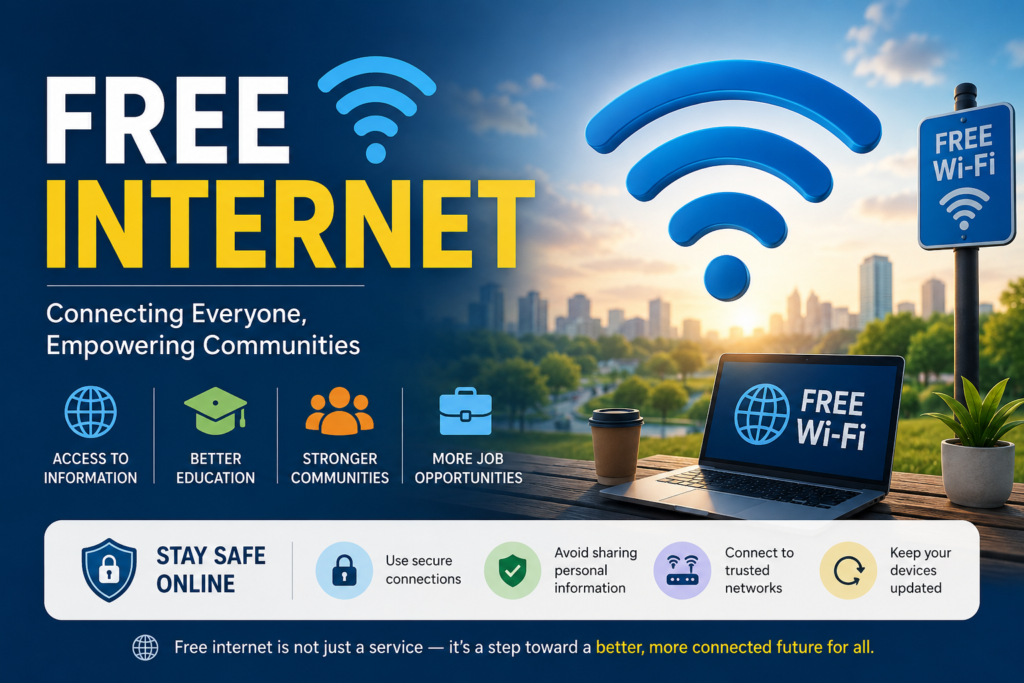
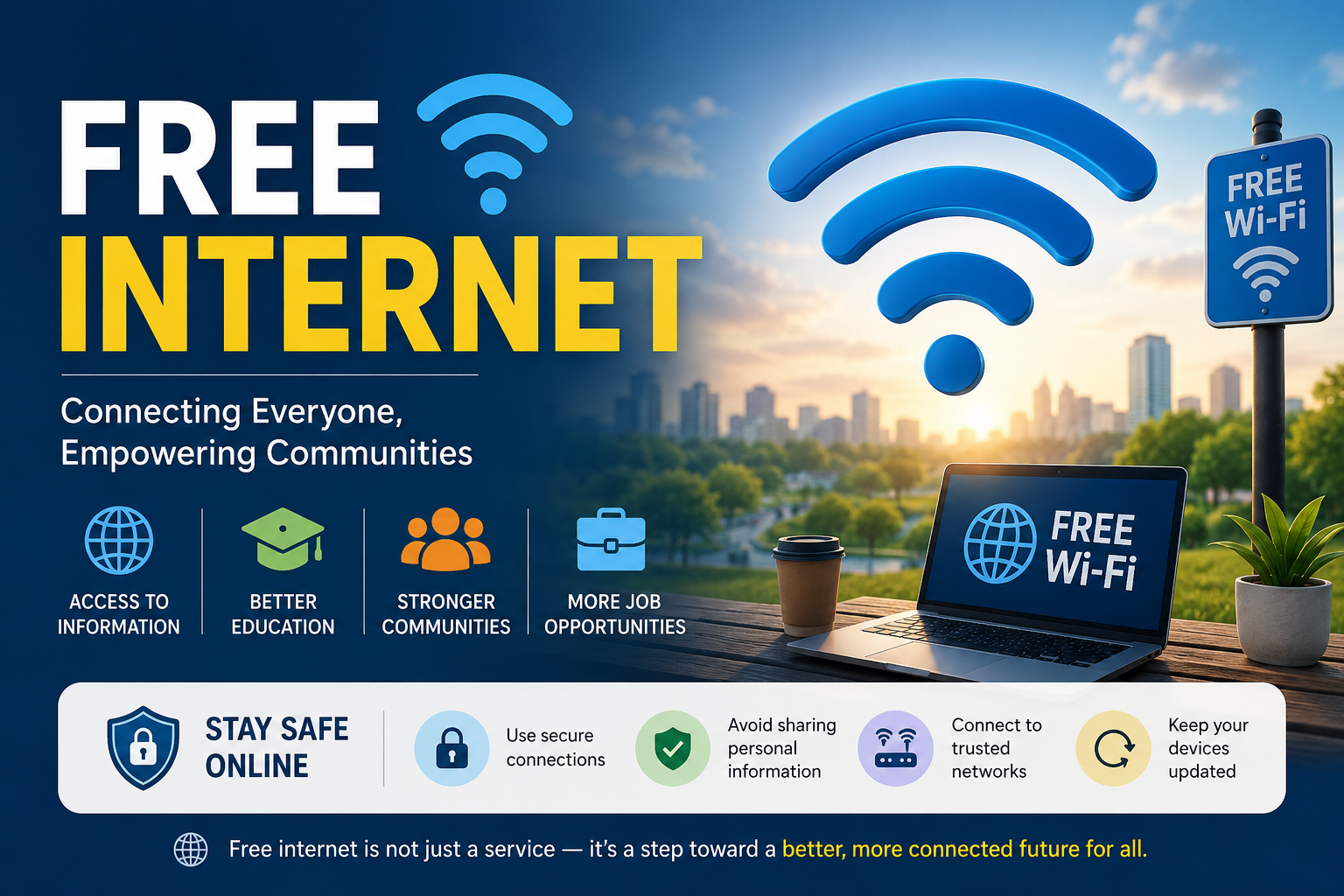
Free internet refers to internet access that users can use without paying directly. It may be provided by governments, educational institutions, businesses, or organizations as a public service or promotional offer.
Legal Ways to Get Free Internet
- Public Wi-Fi
Many places provide free Wi-Fi, including:
Libraries
Airports
Shopping malls
Cafes and restaurants
Universities
Public parks
These networks allow visitors to browse the internet without paying. - Government Programs
Many governments offer free or low-cost internet services to students, schools, libraries, and low-income families to improve digital access. - Educational Institutions
Schools, colleges, and universities often provide free internet to students for research and online learning. - Mobile Network Promotions
Telecom companies sometimes offer:
Free daily data
Welcome bonuses
Promotional internet packages
Free access to selected educational websites or apps - Community Networks
Some communities create shared Wi-Fi networks to provide affordable or free internet access to local residents.
Benefits of Free Internet
Improves Education
Students can access online courses, digital libraries, educational videos, and research materials.
Supports Job Opportunities
People can search for jobs, learn new skills, and work remotely using free internet.
Better Communication
Free internet allows people to communicate through messaging apps, email, and video calls.
Promotes Digital Inclusion
People from rural and low-income communities can participate in the digital economy.
Helps Businesses
Small businesses can market products online, communicate with customers, and grow their businesses.
Risks of Public Free Wi-Fi
Although free internet is useful, public networks can have security risks.
Common risks include:
Data theft
Fake Wi-Fi hotspots
Malware attacks
Password theft
Identity theft
Safety Tips
When using free internet:
Avoid logging into banking accounts on public Wi-Fi.
Use websites with HTTPS encryption.
Keep your device updated.
Turn off file sharing.
Use a trusted VPN if possible.
Avoid entering sensitive information on unsecured networks.
Free Internet in Pakistan
In Pakistan, free internet may be available through:
Public Wi-Fi at universities and libraries
Wi-Fi in shopping malls and restaurants
Promotional offers from mobile network providers
Government and educational digital initiatives
Availability varies by location and service provider.
Common Myths
Many websites and videos claim they can provide unlimited free internet through secret apps or tricks. Most of these claims are false and may:
Steal your personal information
Install malware
Violate the terms of service of internet providers
Always use legal and trusted sources for internet access.
The Future of Free Internet
New technologies such as satellite internet, community Wi-Fi, and government digital inclusion programs may make internet access more affordable and available worldwide. Expanding internet access can improve education, healthcare, and economic development.
Conclusion
Free internet can help millions of people access education, employment, and communication opportunities. However, users should rely only on legal methods and stay aware of online security risks. As technology advances, more people around the world are expected to gain safe and affordable internet access, helping bridge the digital divide.
Free Internet: Connecting the World Without BarriersIn today’s digital age, internet access has become a basic necessity rather than a luxury. Free internet allows people to connect, learn, work, and communicate without paying for data or Wi-Fi services. It plays a vital role in improving education, supporting online businesses, providing access to government services, and helping people stay connected with family and friends.Free internet is commonly available through public Wi-Fi hotspots in libraries, airports, shopping malls, universities, and cafes. Many governments, schools, and nonprofit organizations also offer free internet programs to reduce the digital divide and ensure equal access to information.The benefits of free internet are significant. Students can attend online classes and access educational resources, job seekers can apply for employment opportunities, entrepreneurs can promote their businesses online, and patients can use telemedicine services. It also supports social communication through email, messaging apps, and video calls.However, users should remain cautious when using public Wi-Fi. It is important to avoid accessing sensitive accounts such as online banking, use secure (HTTPS) websites, keep devices updated, and consider using a VPN for extra security.As technology continues to evolve, initiatives like community Wi-Fi networks, satellite internet, and public digital infrastructure are making internet access more affordable and accessible worldwide. Free internet has the potential to empower communities, boost economic growth, and create equal opportunities for millions of people.
