Portugal: A Complete Guide to the Country of History, Culture, and Natural Beauty
Introduction
Portugal is one of the oldest countries in Europe, known for its rich history, beautiful coastline, delicious cuisine, and vibrant culture. Located on the western edge of the Iberian Peninsula, Portugal has played a significant role in world exploration, trade, and maritime history. Today, it is one of Europe’s most popular tourist destinations, attracting millions of visitors every year.
This article explores Portugal’s geography, history, economy, culture, tourism, education, sports, and future prospects.
Geography
Portugal is situated in southwestern Europe and shares its only land border with Spain. It also has a long Atlantic coastline, making it an important maritime nation.
- Capital: Lisbon
- Largest City: Lisbon
- Official Language: Portuguese
- Currency: Euro (€)
- Population: Approximately 10 million people
- Area: About 92,000 square kilometers
Portugal also includes the autonomous island regions of Madeira and the Azores in the Atlantic Ocean.
History
Portugal has a remarkable history dating back thousands of years. It became an independent kingdom in 1143 and is one of Europe’s oldest continuously existing nations.
During the 15th and 16th centuries, Portugal led the Age of Exploration. Famous Portuguese explorers discovered new sea routes that connected Europe with Africa, Asia, and South America.
One of the most famous explorers was Vasco da Gama, who became the first European to reach India by sea in 1498. Portugal also established colonies in several parts of the world, including Brazil.
Government
Portugal is a democratic republic.
The government consists of:
- A President
- A Prime Minister
- A Parliament
The country is a member of several international organizations, including the European Union, United Nations, and North Atlantic Treaty Organization.
Economy
Portugal has a modern and diversified economy.
Major industries include:
- Tourism
- Agriculture
- Fishing
- Wine production
- Textile manufacturing
- Renewable energy
- Technology
- Automobile parts
Portugal is one of the world’s leading producers of cork, supplying a large share of global cork products.
Culture
Portuguese culture reflects influences from Europe, Africa, South America, and Asia.
Important cultural elements include:
- Traditional music called Fado
- Historic architecture
- Religious festivals
- Family traditions
- Handcrafted ceramics
- Beautiful tile artwork known as Azulejos
Portuguese people are known for their hospitality and respect for tradition.
Food
Portuguese cuisine is famous worldwide.
Popular dishes include:
- Bacalhau (salted cod)
- Grilled sardines
- Seafood rice
- Portuguese chicken
- Caldo Verde soup
The country’s most famous dessert is the Pastel de Nata, a delicious custard tart enjoyed by locals and tourists alike.
Tourism
Tourism is one of Portugal’s biggest industries.
Popular attractions include:
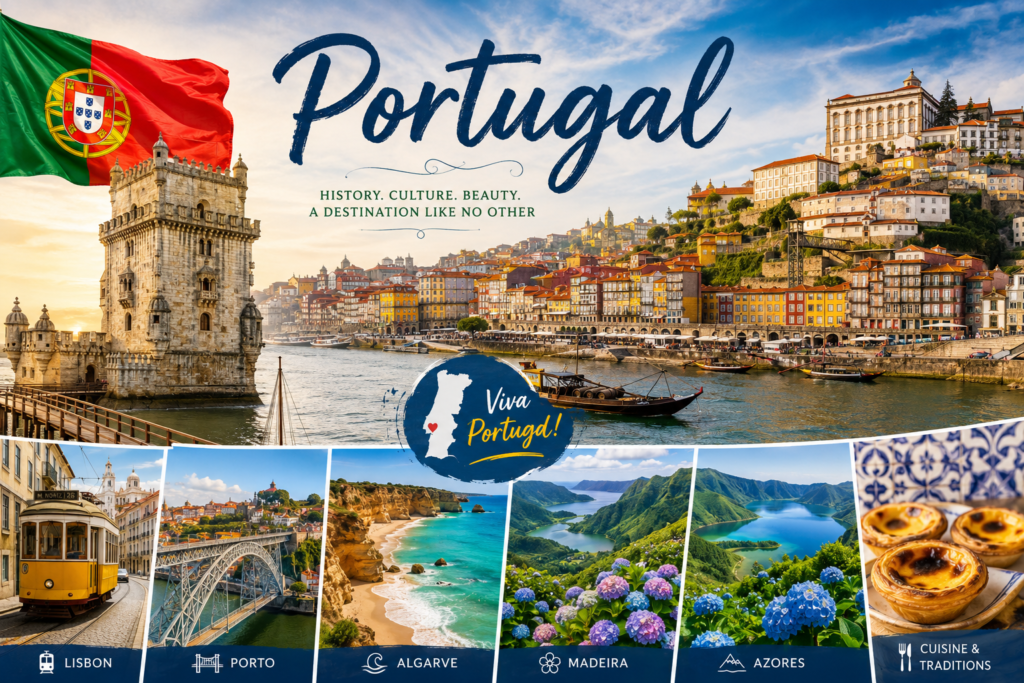
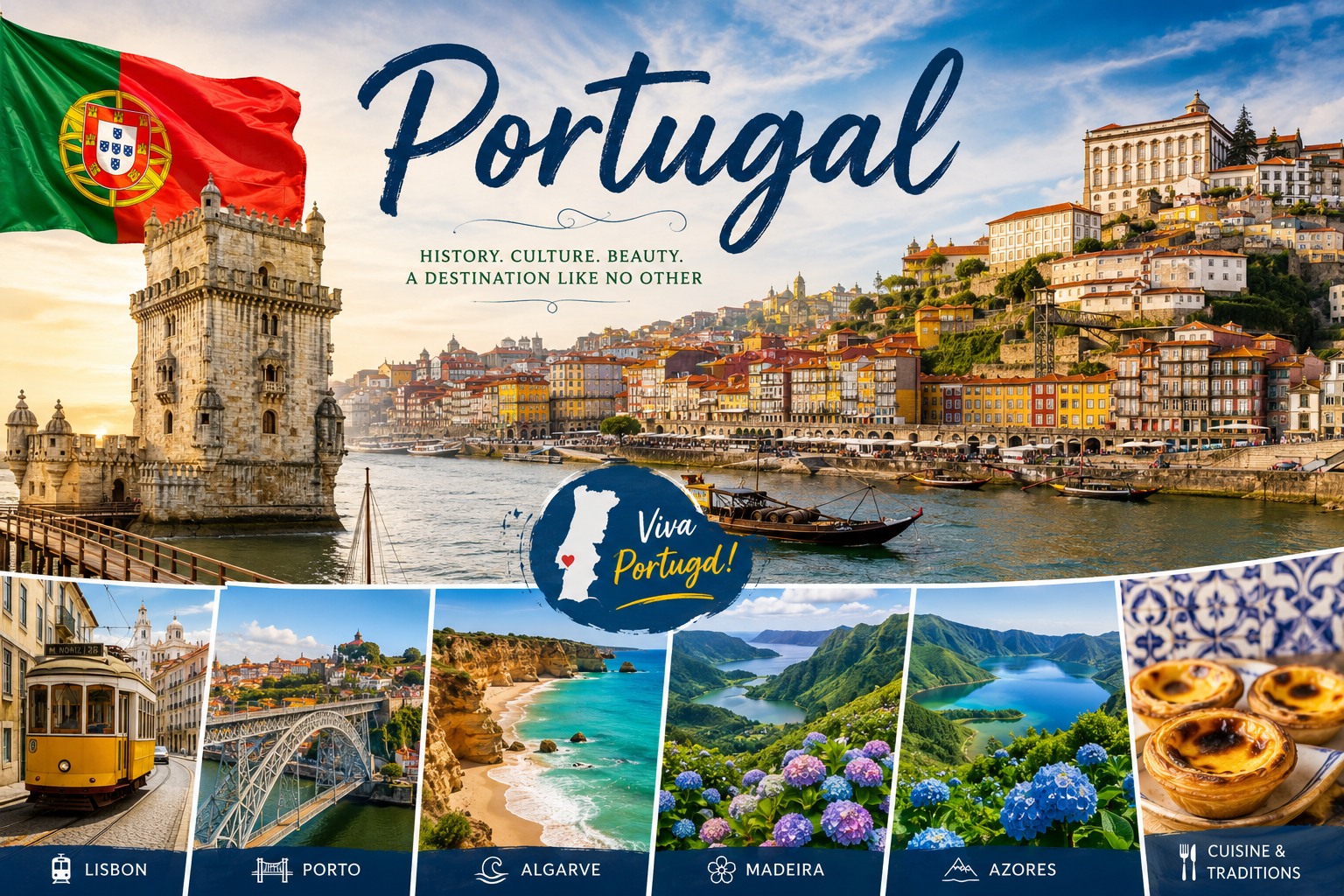
- Lisbon – Historic neighborhoods, trams, castles, and museums.
- Porto – Famous for port wine and riverside scenery.
- Algarve – Stunning beaches and sea cliffs.
- Madeira – Mountain landscapes and subtropical climate.
- Azores – Volcanic islands, lakes, and whale watching.
Visitors enjoy surfing, hiking, historical monuments, and coastal adventures.
Education
Portugal has made significant improvements in education over the past few decades.
The country offers:
- Free public education for children
- Well-respected universities
- Strong research institutions
- International student exchange programs
Higher education continues to grow in science, technology, engineering, and medicine.
Sports
Football is the most popular sport in Portugal.
The country has produced many world-class players, including Cristiano Ronaldo, one of the greatest footballers in history.
Major football clubs include:
- S.L. Benfica
- FC Porto
- Sporting CP
Portugal won the UEFA Euro 2016 and the 2019 UEFA Nations League Finals.
Climate
Portugal has a Mediterranean climate with Atlantic influences.
- Warm, dry summers
- Mild winters
- Pleasant spring and autumn seasons
The southern regions receive more sunshine than most European countries, making Portugal an ideal year-round destination.
Renewable Energy
Portugal is recognized for its investment in renewable energy.
The country generates a significant portion of its electricity from:
- Wind power
- Solar energy
- Hydroelectric power
These investments help reduce carbon emissions and support environmental sustainability.
Interesting Facts
- Portugal is one of the oldest nations in Europe.
- Portuguese is spoken by more than 250 million people worldwide.
- Lisbon is among the oldest capitals in Europe.
- Portugal has one of the world’s oldest universities, the University of Coimbra.
- The country is famous for cork production and high-quality wines.
- Portugal is consistently ranked among the safest countries in the world.
Challenges
Like many developed nations, Portugal faces several challenges:
- An aging population
- Rising housing costs in major cities
- Economic competition
- Climate change impacts
- Protecting historical heritage while supporting tourism
The government continues to invest in innovation, education, and sustainable development to address these issues.
Conclusion
Portugal is a nation with a remarkable past and a promising future. From its pioneering role in global exploration to its thriving tourism industry, renewable energy initiatives, and rich cultural traditions, Portugal continues to attract admiration from around the world. Whether someone is interested in history, beaches, architecture, football, or cuisine, Portugal offers a unique and unforgettable experience.
