Introduction
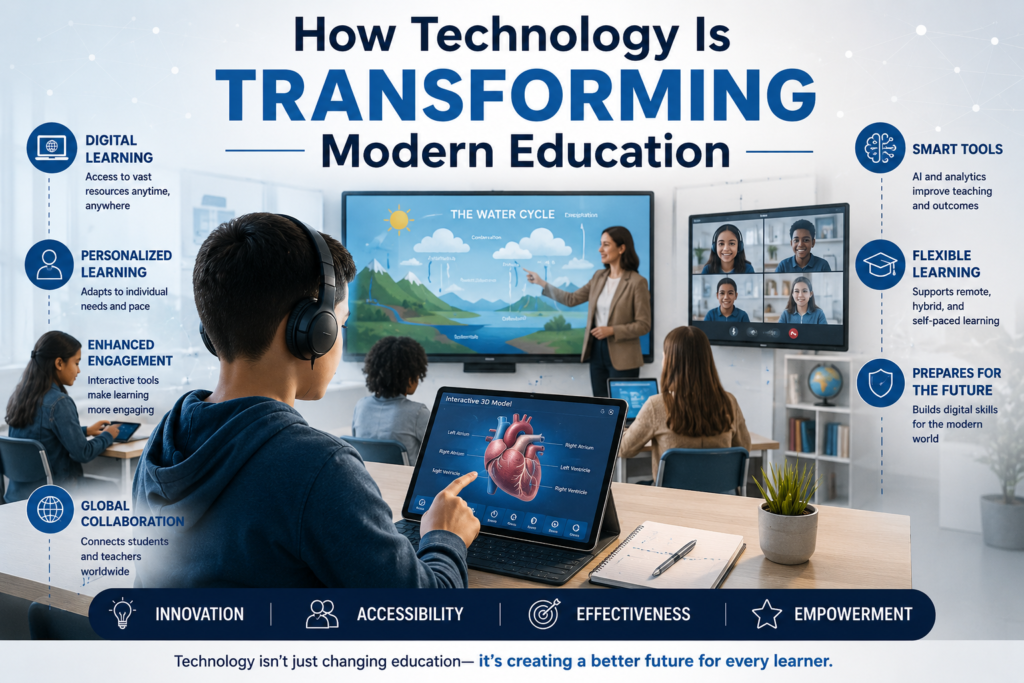
Technology has become an integral part of modern life, influencing the way people communicate, work, and learn. In the field of education, technological advancements have revolutionized traditional teaching methods and created new opportunities for students and educators alike. From online learning platforms and digital classrooms to artificial intelligence and virtual reality, technology is reshaping the educational landscape. It has made learning more accessible, interactive, and efficient, enabling students to acquire knowledge and skills in ways that were unimaginable a few decades ago.
Increased Access to Education
One of the most significant contributions of technology to education is increased accessibility. In the past, access to quality education was often limited by geographical location, financial constraints, or lack of educational resources. Today, students can access educational content from anywhere in the world through the internet.
Online learning platforms, educational websites, and virtual classrooms allow learners to study at their own pace and convenience. Distance education programs have made it possible for individuals to earn degrees and certifications without attending traditional institutions. This accessibility has expanded educational opportunities for people living in remote areas and those who face physical or economic barriers.
Interactive and Engaging Learning Experiences
Technology has transformed passive learning into an active and engaging process. Traditional teaching methods often relied heavily on textbooks and lectures, whereas modern classrooms incorporate multimedia tools such as videos, animations, simulations, and interactive presentations.
These digital resources help students understand complex concepts more effectively by presenting information in visually appealing and interactive formats. Educational games and learning applications further enhance student engagement by making learning enjoyable and motivating. As a result, students are more likely to participate actively in lessons and retain information for longer periods.
Personalized Learning Opportunities
Every student has unique learning needs, strengths, and preferences. Technology enables personalized learning experiences by allowing educational content to be tailored to individual learners. Adaptive learning software uses data and analytics to assess student performance and provide customized lessons based on their progress.
This approach helps students learn at their own pace, ensuring that they fully understand concepts before moving on to more advanced topics. Personalized learning also benefits struggling students by offering additional support while allowing advanced learners to explore subjects in greater depth.
Improved Communication and Collaboration
Technology has significantly enhanced communication between teachers, students, and parents. Digital platforms, email, messaging applications, and learning management systems make it easier to share information, assignments, and feedback.
Collaboration has also become more efficient through online tools that allow students to work together on projects regardless of their physical location. Cloud-based applications enable real-time document sharing, discussion, and teamwork. These collaborative experiences help students develop communication, problem-solving, and teamwork skills that are essential in the modern workplace.
The Rise of Online Learning
Online education has become one of the most notable developments in modern learning. Virtual classrooms and video conferencing technologies enable teachers to deliver lessons remotely while maintaining interaction with students.
The popularity of online learning increased dramatically during global disruptions such as the COVID-19 pandemic, demonstrating the importance of technology in ensuring educational continuity. Today, many institutions offer hybrid learning models that combine traditional classroom instruction with online components, providing greater flexibility for learners.
Artificial Intelligence in Education
Artificial Intelligence (AI) is playing an increasingly important role in modern education. AI-powered tools can automate administrative tasks, assess student performance, and provide instant feedback. Intelligent tutoring systems help students receive personalized guidance and support based on their learning patterns.
AI also assists educators by identifying areas where students may need additional help. Through data analysis, teachers can better understand student progress and adapt their teaching strategies accordingly. As AI technology continues to evolve, its impact on education is expected to grow significantly.
Virtual Reality and Augmented Reality
Virtual Reality (VR) and Augmented Reality (AR) are transforming learning by creating immersive educational experiences. These technologies allow students to explore environments and concepts that would otherwise be difficult to access.
For example, students can take virtual tours of historical landmarks, explore the human body in three dimensions, or conduct simulated science experiments. Such experiences make learning more engaging and help students develop a deeper understanding of complex subjects through hands-on interaction.
Development of Digital Skills
Modern education not only uses technology as a teaching tool but also prepares students for a technology-driven world. Students learn essential digital skills such as computer literacy, information management, online communication, and data analysis.
These competencies are increasingly important in today’s job market, where technology is used across almost every industry. By integrating technology into education, schools help students develop the skills necessary for future academic and professional success.
Challenges of Technology in Education
Despite its many advantages, the integration of technology in education also presents challenges. Excessive screen time can affect students’ health and concentration. Not all students have equal access to devices and reliable internet connections, creating a digital divide.
Additionally, concerns regarding data privacy, cybersecurity, and online distractions must be addressed. Educators and policymakers must work together to ensure that technology is used responsibly and effectively while minimizing potential risks.
Conclusion
Technology is transforming modern education by making learning more accessible, personalized, interactive, and efficient. It has expanded educational opportunities, improved communication, and introduced innovative teaching methods that enhance student engagement and achievement. While challenges remain, the benefits of technology in education are undeniable. As technological advancements continue to evolve, they will play an increasingly important role in shaping the future of learning and preparing students for success in a rapidly changing world.
