Introduction
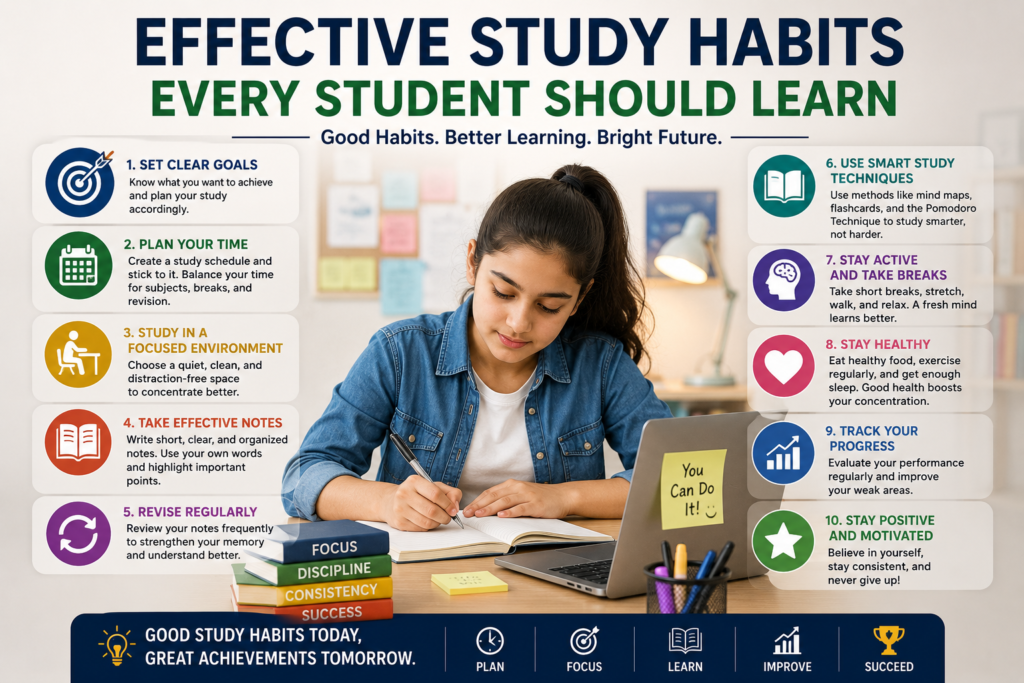
Success in education is not determined solely by intelligence or talent. More often, it depends on the study habits students develop throughout their academic journey. Effective study habits help students manage their time, improve concentration, retain information, and perform better in examinations. In today’s fast-paced and competitive educational environment, learning how to study efficiently is just as important as learning the subject matter itself. By adopting productive study techniques, students can achieve their academic goals while reducing stress and maintaining a healthy balance between studies and personal life.
Setting Clear Academic Goals
One of the most important study habits is setting clear and realistic goals. Students who know what they want to achieve are more motivated and focused. Goals provide direction and help students organize their efforts effectively.
Academic goals can be short-term, such as completing an assignment on time, or long-term, such as achieving high grades in a semester. Breaking larger goals into smaller, manageable tasks makes studying less overwhelming and increases the likelihood of success.
Creating a Study Schedule
Time management is a crucial factor in academic achievement. A well-planned study schedule helps students allocate sufficient time to each subject and avoid last-minute cramming before examinations.
Students should create a daily or weekly timetable that includes study sessions, breaks, extracurricular activities, and personal responsibilities. Consistency is key, as studying regularly helps reinforce learning and improves long-term retention of information. Following a schedule also develops discipline and reduces procrastination.
Choosing a Suitable Study Environment
The environment in which students study greatly affects their concentration and productivity. An effective study space should be quiet, comfortable, well-lit, and free from distractions such as television, excessive noise, or unnecessary use of mobile phones.
Keeping study materials organized and maintaining a clean workspace can further enhance focus and efficiency. A dedicated study area helps the brain associate that space with learning, making it easier to concentrate during study sessions.
Practicing Active Learning
Active learning involves engaging directly with the material rather than simply reading or memorizing information. Students can improve understanding and retention by taking notes, highlighting key points, asking questions, and summarizing concepts in their own words.
Techniques such as group discussions, teaching concepts to others, and solving practice problems encourage deeper understanding. Active learning helps students develop critical thinking skills and strengthens their ability to apply knowledge in different situations.
Taking Effective Notes
Good note-taking is an essential study skill that helps students organize information and review important concepts efficiently. Notes should be clear, concise, and well-structured.
Students can use methods such as bullet points, outlines, diagrams, or mind maps to make information easier to understand and remember. Reviewing notes regularly reinforces learning and reduces the amount of time needed for exam preparation.
Using Time Wisely
Many students struggle with distractions and poor time management. Effective learners prioritize important tasks and avoid wasting valuable study time. Techniques such as the Pomodoro Method, which involves studying for focused periods followed by short breaks, can improve concentration and productivity.
Students should identify activities that consume excessive time, such as social media use, and establish limits to maintain focus on academic responsibilities.
Reviewing and Revising Regularly
Regular revision is one of the most effective ways to improve memory retention. Instead of studying large amounts of material at once, students should review lessons frequently over time. This approach, known as spaced repetition, helps transfer information from short-term memory to long-term memory.
Revision sessions should include reviewing notes, practicing questions, and testing understanding of key concepts. Consistent revision reduces exam anxiety and increases confidence.
Developing Strong Reading Habits
Reading is a fundamental skill that supports learning across all subjects. Students should cultivate the habit of reading textbooks, reference materials, academic articles, and other educational resources regularly.
Effective reading involves understanding the main ideas, identifying important details, and analyzing information critically. Strong reading habits expand knowledge, improve vocabulary, and enhance comprehension skills.
Maintaining Physical and Mental Well-Being
Academic success is closely connected to physical and mental health. Students who get adequate sleep, eat nutritious foods, and engage in regular physical activity tend to perform better academically.
Stress management is equally important. Relaxation techniques, hobbies, exercise, and spending time with family and friends can help maintain emotional well-being. A healthy mind and body improve concentration, memory, and overall learning ability.
Seeking Help When Needed
Successful students recognize when they need assistance and are not afraid to ask for help. Teachers, classmates, tutors, and educational resources can provide valuable support when students encounter difficulties.
Seeking clarification early prevents misunderstandings from becoming larger academic challenges. Collaborative learning and open communication contribute to a more effective and enjoyable educational experience.
Avoiding Procrastination
Procrastination is one of the biggest obstacles to academic success. Delaying tasks often leads to increased stress, rushed work, and lower-quality results. Students can overcome procrastination by breaking assignments into smaller steps, setting deadlines, and rewarding themselves for completing tasks.
Developing self-discipline and maintaining a positive attitude toward learning can significantly improve productivity and academic performance.
Conclusion
Effective study habits are essential for academic success and lifelong learning. By setting goals, managing time wisely, practicing active learning, maintaining a healthy lifestyle, and reviewing material regularly, students can improve their understanding, retention, and performance. These habits not only help students achieve better grades but also develop valuable skills such as discipline, responsibility, and critical thinking. By cultivating effective study habits early in life, students can build a strong foundation for future educational and professional success.
