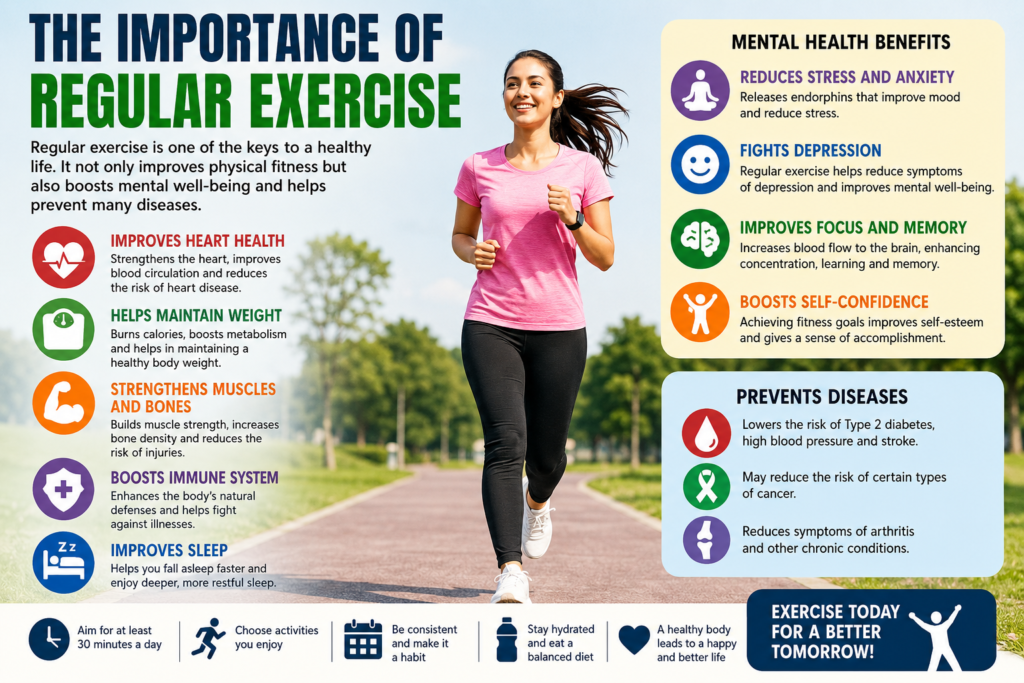
Introduction. Regular exercise is one of the most effective ways to maintain good health and improve the quality of life. In today’s modern world, many people spend long hours sitting at desks, using computers, watching television, or scrolling through mobile phones. This sedentary lifestyle has led to an increase in health problems such as obesity, diabetes, heart disease, and stress-related illnesses. Exercise provides a simple and natural solution to many of these problems. It strengthens the body, improves mental health, boosts energy levels, and helps people live longer and healthier lives.Exercise refers to any physical activity that requires movement and energy. It can include walking, jogging, cycling, swimming, playing sports, dancing, yoga, or even simple household activities. The key is to engage in physical activity regularly and consistently. Health experts recommend that individuals perform at least 150 minutes of moderate physical activity each week. By making exercise a regular part of daily life, people can enjoy numerous physical, mental, social, and emotional benefits. Physical Health Benefits. One of the most important benefits of regular exercise is improved physical health. Exercise strengthens the heart, lungs, muscles, and bones. It helps the body function more efficiently and reduces the risk of many diseases. Improves Heart Health. The heart is one of the most important organs in the body. Regular exercise strengthens the heart muscle, allowing it to pump blood more effectively. This improves circulation and ensures that oxygen and nutrients are delivered to all parts of the body. People who exercise regularly have a lower risk of developing heart disease, high blood pressure, and stroke.Activities such as walking, running, cycling, and swimming are particularly beneficial for cardiovascular health. These exercises increase heart rate and improve the efficiency of the circulatory system. As a result, individuals who exercise regularly often have healthier blood pressure levels and better overall heart function.
Helps Maintain a Healthy Weight
Obesity has become a major health concern worldwide. Excess body weight increases the risk of many diseases, including diabetes, heart disease, and certain types of cancer. Regular exercise helps burn calories and maintain a healthy body weight.When combined with a balanced diet, exercise can help individuals lose excess weight and prevent weight gain. It also increases metabolism, allowing the body to burn calories more efficiently even while at rest. Maintaining a healthy weight not only improves physical appearance but also reduces the risk of serious health complications.
Strengthens Muscles and Bones
Exercise plays a crucial role in building and maintaining strong muscles and bones. Activities such as weight training, resistance exercises, and sports help increase muscle strength and endurance. Strong muscles support the body’s movements and reduce the risk of injuries.Similarly, weight-bearing exercises such as walking, jogging, and dancing help strengthen bones. This is especially important for preventing osteoporosis, a condition that causes bones to become weak and fragile. Strong bones are essential for maintaining mobility and independence, especially in older age.
Improves Flexibility and Balance
Regular exercise improves flexibility, coordination, and balance. Activities such as stretching, yoga, and tai chi help maintain joint mobility and reduce stiffness. Improved flexibility allows people to move more freely and perform daily activities with ease.Balance exercises are particularly important for older adults, as they help prevent falls and injuries. Good balance and coordination contribute to overall physical fitness and confidence in movement.
Boosts Immune System
Exercise has a positive effect on the immune system. Moderate physical activity improves circulation, allowing immune cells to move more efficiently throughout the body. This helps the body detect and fight infections more effectively.People who exercise regularly often experience fewer illnesses and recover more quickly from common infections. While exercise cannot completely prevent disease, it significantly contributes to overall health and resilience.
Mental Health Benefits
In addition to its physical advantages, exercise has a powerful impact on mental health. It helps reduce stress, improve mood, and enhance cognitive function.
Reduces Stress
Stress is a common part of modern life. Work pressures, academic responsibilities, financial concerns, and personal challenges can all contribute to stress. Regular exercise provides a natural way to manage stress and promote relaxation.Physical activity stimulates the production of endorphins, often called “feel-good” hormones. These chemicals help improve mood and reduce feelings of tension and anxiety. Even a short walk can help clear the mind and relieve stress.
Helps Combat Depression and Anxiety
Mental health disorders such as depression and anxiety affect millions of people worldwide. Research has shown that regular exercise can be an effective tool for managing these conditions.Exercise increases the production of neurotransmitters such as serotonin and dopamine, which play important roles in regulating mood. People who engage in regular physical activity often report feeling happier, calmer, and more optimistic.While exercise is not a replacement for professional medical treatment when needed, it can be an important part of a comprehensive mental health strategy.
Improves Self-Confidence
Regular exercise often leads to improvements in physical fitness, strength, and appearance. These changes can boost self-esteem and self-confidence.Achieving fitness goals, whether big or small, creates a sense of accomplishment. Individuals who exercise regularly often feel more capable and confident in their abilities. This positive self-image can have a beneficial impact on many aspects of life.
Enhances Cognitive Function
Exercise benefits not only the body but also the brain. Physical activity increases blood flow to the brain, improving concentration, memory, and learning ability.Studies have shown that people who exercise regularly tend to perform better on cognitive tasks and may have a lower risk of developing age-related cognitive decline. Exercise supports brain health throughout life and contributes to better mental performance.
Benefits for Students
Regular exercise is especially important for students. It contributes to academic success, emotional well-being, and overall development.
Improves Concentration
Students often face demanding academic schedules that require focus and concentration. Exercise increases blood flow to the brain, helping students stay alert and attentive during classes and study sessions.Regular physical activity has been linked to improved concentration, better memory retention, and enhanced problem-solving skills. Students who exercise regularly often find it easier to manage their academic responsibilities.
Reduces Academic Stress
Examinations, assignments, and academic competition can create significant stress for students. Exercise provides a healthy outlet for releasing tension and maintaining emotional balance.Participating in sports, running, or simply walking outdoors can help students relax and recharge. This can lead to better academic performance and a healthier approach to learning.
Promotes Healthy Growth
Physical activity supports the healthy growth and development of children and teenagers. It helps build strong bones, muscles, and cardiovascular systems. Exercise also encourages healthy habits that can continue into adulthood.
Benefits for Older Adults
Exercise remains important throughout life, including during old age.
Maintains Independence
As people age, maintaining mobility and independence becomes increasingly important. Regular exercise helps older adults retain strength, balance, and flexibility, making it easier to perform daily tasks.
Reduces Risk of Chronic Diseases
Older adults are at greater risk of chronic diseases such as diabetes, heart disease, and arthritis. Regular physical activity can help manage these conditions and improve overall health.
Improves Quality of Life
Exercise contributes to better physical function, improved mood, and increased social engagement. Older adults who remain active often enjoy a higher quality of life and greater independence.
Social Benefits of Exercise
Exercise can also provide valuable social opportunities.Encourages TeamworkMany forms of exercise involve group participation, such as sports teams, fitness classes, and recreational clubs. These activities teach teamwork, communication, and cooperation.
Builds Friendships
Participating in physical activities allows people to meet others with similar interests. Friendships formed through sports and exercise can provide support, motivation, and a sense of belonging.
Strengthens Communities
Community fitness events, sports competitions, and group exercise programs bring people together. These activities promote social interaction and strengthen community bonds.
Exercise and Disease Prevention
Regular physical activity plays a significant role in preventing many diseases.
Type 2 Diabetes
Exercise helps regulate blood sugar levels and improves insulin sensitivity. This reduces the risk of developing Type 2 Diabetes and helps manage the condition in those who already have it.
High Blood Pressure
Regular physical activity can lower blood pressure and improve cardiovascular health. This reduces the risk of heart attacks and strokes.
Certain Types of Cancer
Research suggests that regular exercise may reduce the risk of several cancers, including colon and breast cancer. Physical activity contributes to overall health and may help protect against disease development.ObesityExercise is one of the most effective tools for preventing and managing obesity. Maintaining a healthy weight reduces the risk of many associated health problems.
Types of Exercise
Different types of exercise offer different benefits.Aerobic Exercise Aerobic activities include walking, running, cycling, swimming, and dancing. These exercises improve cardiovascular health and endurance.Strength Training Strength training involves lifting weights or using resistance bands. It helps build muscle mass and improve strength.Flexibility Exercises Stretching and yoga improve flexibility and joint mobility. They reduce stiffness and enhance movement.
Balance ExercisesBalance activities improve coordination and stability, reducing the risk of falls and injuries.Developing a Regular Exercise RoutineCreating a consistent exercise habit is essential for long-term success.
Set Realistic GoalsStart with achievable goals and gradually increase activity levels. Small improvements can lead to significant long-term benefits.Choose Enjoyable ActivitiesPeople are more likely to maintain an exercise routine when they enjoy the activities they perform. Whether it is dancing, cycling, swimming, or sports, choosing enjoyable exercises increases motivation.
Stay ConsistentConsistency is more important than intensity. Regular moderate exercise is more beneficial than occasional intense workouts.Make Exercise Part of Daily LifeSimple habits such as taking the stairs, walking instead of driving short distances, and engaging in active hobbies can contribute to overall fitness.
Challenges and SolutionsMany people face barriers to exercise, including lack of time, motivation, or access to facilities.Lack of TimeBusy schedules can make exercise difficult. However, even short periods of physical activity can provide health benefits. Breaking exercise into smaller sessions throughout the day can be effective.Lack of MotivationSetting goals, tracking progress, and exercising with friends can help maintain motivation.
Limited Resources Exercise does not require expensive equipment or gym memberships. Walking, jogging, bodyweight exercises, and home workouts are accessible and effective options.ConclusionRegular exercise is one of the most valuable investments a person can make in their health and well-being. It strengthens the body, improves mental health, prevents disease, and enhances overall quality of life. From children and students to adults and older individuals, everyone can benefit from regular physical activity.Exercise promotes physical fitness, emotional resilience, cognitive function, and social connection. It helps individuals maintain a healthy weight, strengthen muscles and bones, reduce stress, and improve self-confidence. Furthermore, it plays a vital role in preventing chronic diseases and supporting long-term health.In a world where sedentary lifestyles are increasingly common, making exercise a daily habit is more important than ever. By dedicating time to physical activity and maintaining consistency, individuals can enjoy a healthier, happier, and more fulfilling life. Regular exercise is not merely an option—it is an essential foundation for lifelong health and success.
image
Images
