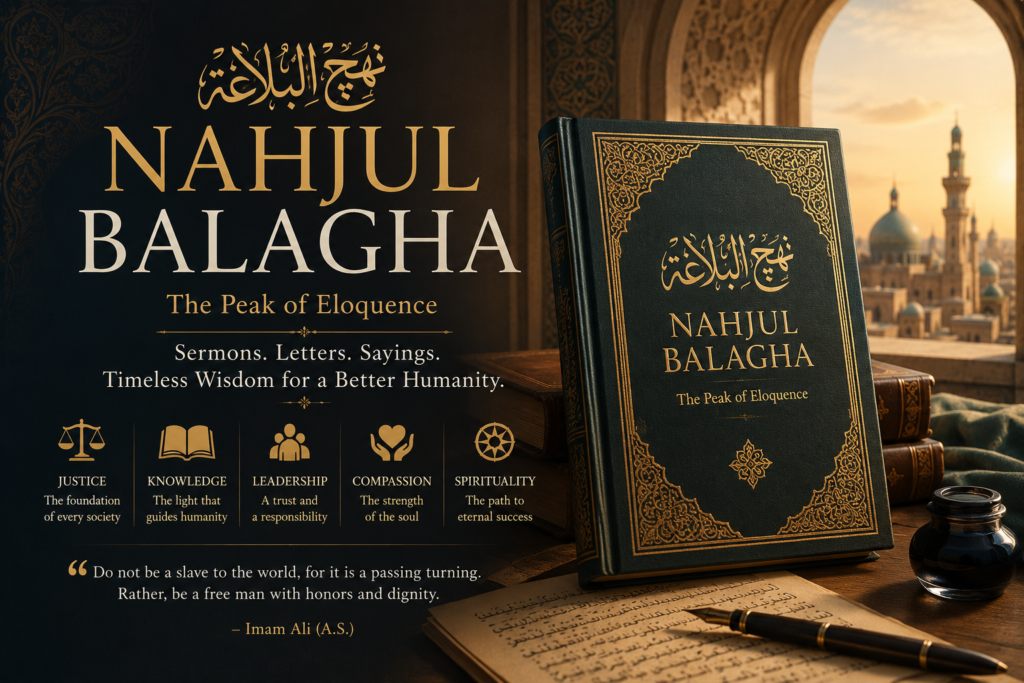
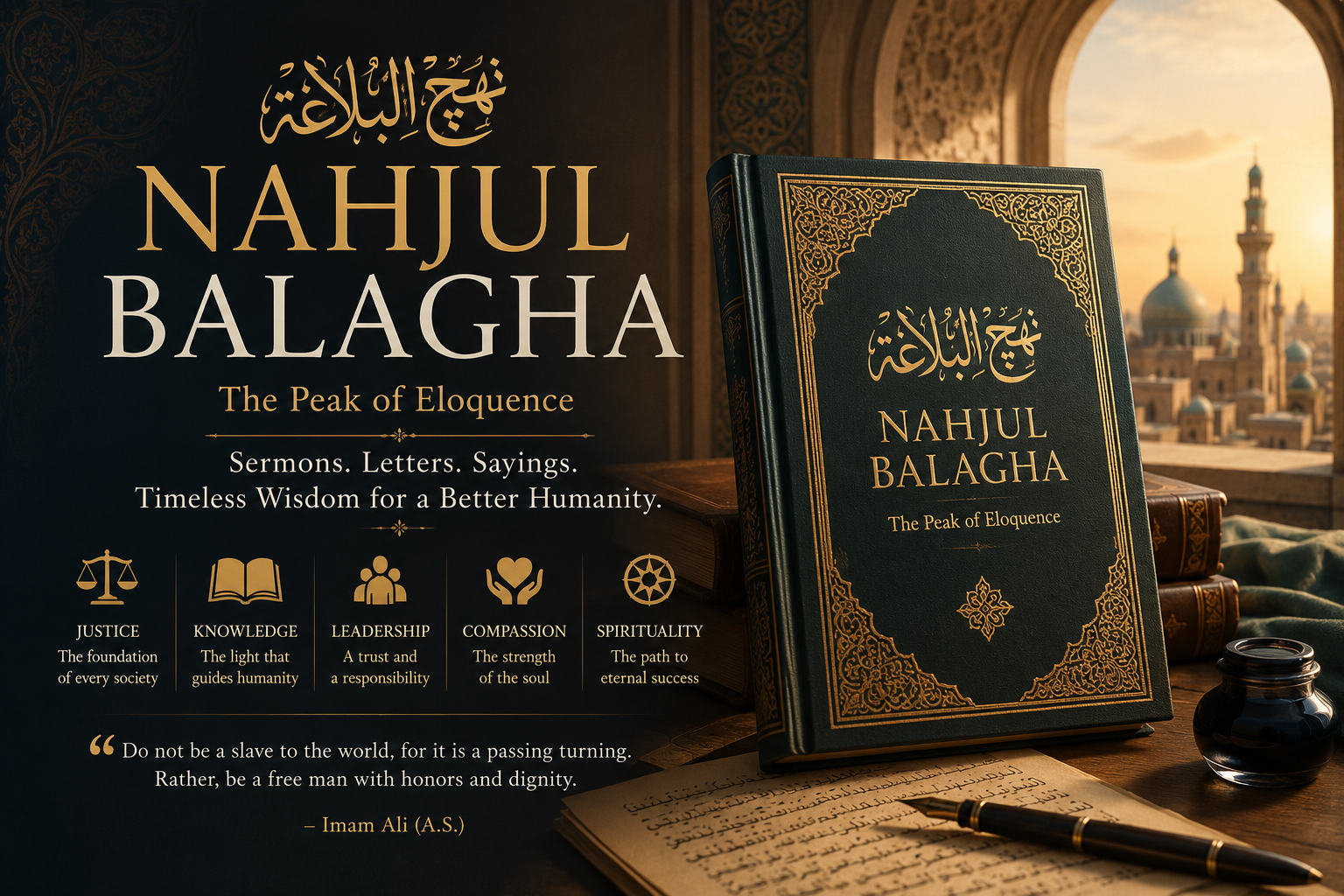
Nahjul Balagha: A Timeless Collection of Wisdom and Guidance
Introduction
Nahjul Balagha (The Peak of Eloquence) is one of the most influential books in Islamic literature. It is a collection of sermons, letters, and sayings attributed to Imam Ali ibn Abi Talib, who was the cousin and son-in-law of the Prophet Muhammad (peace be upon him). The compilation was gathered in the 10th century by Al-Sharif al-Radi, a renowned scholar and poet.
The book is admired not only for its spiritual teachings but also for its literary excellence, philosophical depth, moral guidance, and political wisdom. Muslims and non-Muslims alike have studied Nahjul Balagha for centuries because of its timeless insights into justice, leadership, ethics, and human nature.
Historical Background
After the passing of Prophet Muhammad (peace be upon him), Imam Ali became one of the most respected figures in Islamic history. His speeches, letters, and short sayings were remembered by his companions and later collected by scholars. Around the year 1000 CE, Al-Sharif al-Radi compiled many of these narrations into Nahjul Balagha.
Although the book is highly respected, scholars note that it is a literary compilation rather than a hadith collection with complete chains of narration for every entry. Because of this, individual passages may be evaluated differently by different Islamic scholars.
Structure of Nahjul Balagha
Nahjul Balagha is divided into three main sections:
1. Sermons
The book contains over 200 sermons discussing the greatness of Allah, the purpose of life, justice, morality, social responsibility, and the importance of righteousness. These sermons encourage believers to worship sincerely, remain humble, and avoid worldly greed.
2. Letters
The letters include advice sent to governors, military commanders, judges, family members, and other officials. Among the most famous is the letter to Malik al-Ashtar, which outlines principles of good governance, justice, mercy, and accountability.
3. Sayings
The final section consists of hundreds of brief sayings filled with wisdom. These concise statements cover topics such as patience, knowledge, honesty, friendship, generosity, courage, and self-discipline.
Major Themes
Justice
Justice is one of the central themes of Nahjul Balagha. Imam Ali teaches that rulers must treat all people fairly regardless of their wealth, background, or status. He emphasizes that oppression destroys societies while justice strengthens them.
Knowledge and Wisdom
The book repeatedly praises knowledge as one of humanity’s greatest treasures. It encourages continuous learning, reflection, and intellectual growth.
Leadership
Nahjul Balagha presents leadership as a responsibility rather than a privilege. Leaders should serve the people honestly, avoid corruption, and remain accountable for their actions.
Morality
The collection promotes honesty, humility, kindness, forgiveness, patience, and generosity. It warns against arrogance, greed, dishonesty, and injustice.
Spiritual Growth
Imam Ali frequently reminds believers to remember Allah, prepare for the Hereafter, and avoid becoming excessively attached to worldly pleasures.
Literary Excellence
Nahjul Balagha is celebrated as one of the finest examples of classical Arabic prose. Its eloquent language, vivid imagery, and powerful expressions have inspired generations of scholars, poets, and writers. The title itself, “The Peak of Eloquence,” reflects its reputation for remarkable literary beauty.
Influence on Islamic Thought
Nahjul Balagha has greatly influenced Islamic theology, ethics, philosophy, law, politics, and spirituality. It is especially important in Shia Islam and is also widely studied by many Sunni scholars for its moral teachings and eloquence.
Universities and research institutions across the world continue to analyze the book’s discussions on governance, justice, ethics, and human rights.
Lessons for Modern Society
Many teachings found in Nahjul Balagha remain relevant today:
- Leaders should govern with justice and transparency.
- Education and knowledge are essential for progress.
- Society should protect the rights of the weak and vulnerable.
- Honesty builds trust within communities.
- Patience and perseverance help overcome difficulties.
- Compassion strengthens relationships and societies.
Importance in Education
Students of Islamic studies often study Nahjul Balagha to improve their understanding of Arabic literature, Islamic ethics, leadership principles, and philosophy. Its concise sayings are frequently quoted in speeches, books, and academic research.
Conclusion
Nahjul Balagha remains one of the most remarkable works of Islamic literature. Its sermons, letters, and sayings provide guidance on faith, morality, justice, leadership, and personal development. While Muslims from different traditions may differ on the authenticity of particular passages, the collection is widely admired for its profound wisdom, eloquent language, and enduring influence. Even after more than a thousand years, Nahjul Balagha continues to inspire readers seeking knowledge, ethical leadership, and spiritual growth.
